For First time visitors...

WELCOME!!

This blog serves to document my sightings of fauna/flora in Singapore!! And by doing so, I hope that the reader would realise that there are still pockets of natures even though most of Singapore is urbanised. Also, more importantly, knowing what we have could be the first step to protecting them. :)

CONSERVATION starts right here at home!!!

Sunday, July 19, 2009

Writer is out of town till end of Dec.
Please do return to visit this blog in Jan 2010. :)

Saturday, June 27, 2009

Cyrene...

As expected, the number of knobbly seastar (Protoreaster nodosus) around is A LOT, compared to the other reefs I've been too!!! These poor creatures are harvested and sold in aquariums. Cyrene is the only place where their population is rather stable. Every animal deserve their right to live!!! I've decided to photo of every knobbly seastar I've seen on cyrene.

Photobucket
Photobucket
Photobucket
Photobucket
Photobucket
Photobucket
Photobucket
Photobucket
Photobucket
Photobucket
Photobucket
Photobucket

There is just one Knobbly seastar which was in a really really weird position... ANyone knows why it is the way it is???
Photobucket

Worm eel
(Family Ophichthidae). Though these are common animals, this is actually my first sighting for them. They are very active burrowers. It looks like a worm but it is actually a fish!!
Photobucket

Sea cucumber.
Photobucket

Big Synaptid Sea cucumber.
Photobucket
Photobucket

Common Seastar. There are tons of these around... Can you see the seastar?
Photobucket
Photobucket

Hairy crab.
Photobucket

Huge anemone. But i'm not sure of its ID...
Photobucket

Tubeworms
Photobucket
Photobucket
Photobucket

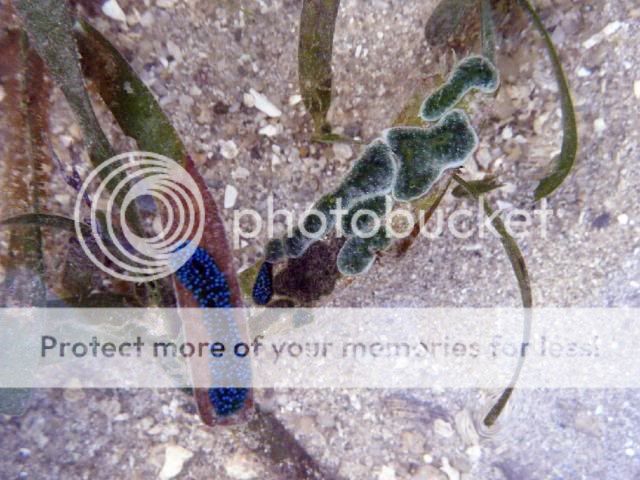
Gum drop ascidians. Lots of these on the thick patches of seagrasses.
Photobucket

Turban snail. Though these snails are common even at other sites, I learn something new about these snails during this trip. They have an additional shell-like operculum. :)
Photobucket
Photobucket
Photobucket

Denison's nudibranch!!! :)
Photobucket

The best find for today are the fresh eggs in the branching coral. Although I've seen in during diving, I've never seen them during low tide before. :)
Photobucket
Photobucket

Friday, June 26, 2009

Of seahorse, octopus, rare crabs and so much more AT Beting Bemban Besar!!!

Hi all!!! For those who are wondering where this place is, Beting Bemban Besar is a submerged reef near to Pulau Semaukau and is seen during low tide. This is our first trip there and I found the reef rather healthy and fauna diversity is rich!!! However, one thing I realise is the lack of seastar. Several members of teams also had the same comment though Ria saw one knobbly sea star...

Pipefish
Photobucket

Tiger-tailed Seahorse (Hippocampus comes). SUPER HUGE ONE!!! at least 10cm. The patterns are very interesting... Seahorses are listed as CITES II (which means their international trade is monitored) and are considered globally vulnerable.
Photobucket

Upside down jellyfish (Cassiopea sp.) The animal prefers to be 'upside down', with its bell facing the sea floor and tentacles facing upwards toward the light. When one it turned the 'right' way up, it will slowly turn itself upside down again. Interesting aint?
Photobucket

Heart Urchin???
Photobucket

Noble Volute (Cymbiola nobilis). Was so lucky to see it laying eggs!!!! :)
Photobucket

Horseshoe crab (Family Limulidae). Though they are called "crabs", like hermit crabs, they are true crabs... The long spine is not a weapon, it's used to turn the animal upright again. Below is a pair that is mating... :P
Photobucket

Close up on one of them.
Photobucket

Mosaic Reef Crab (Lophozozymus pictor) At first when I saw it, I was very excited as it's been a while since i see them!! :) Rarely seeing them explains the fact this crab is an endangered species. However I realised that the eyes are missing. It is a moult???
Photobucket

Floral egg crab (Atergatis floridus). This is the first time seeing this rare crab. This crab is listed as a vulnerable species under the Red list of Singapore.
Photobucket

Marine Spider??? These creatures are rather abundant. They move very fast and sensitive to movement in their environment. I've not sure what these are but it does look like spider. Since the reef would be submerged when the tides return, so the "spider" can breathe underwater??
Photobucket

Sleeping Octopus.
Photobucket

Wriggly Star Anemone.
Photobucket

Flatworm.
Photobucket

Polka-dot Nudibranch (Jorunna funebris)
Photobucket

From here onwards, corals overload!!!! :) But please pardon me for not giving the ID, I'm really bad at ID-ing the corals...
Photobucket
Photobucket
Photobucket
Photobucket
Photobucket
Photobucket
Photobucket
Photobucket
Photobucket
Photobucket
Photobucket
Photobucket
Photobucket
Photobucket
Photobucket
Photobucket
Photobucket
Photobucket

Tuesday, June 23, 2009

AMAZING Changi

I started my series of intertidal trips at Changi. The place is filled with life!!! Several interesting finds that kept me wanting more!! :)

Estuarine seahorse (Hippocampus kuda). This cute seahorse was super super tiny!!!
Photobucket

Pipefish (Family Syngnathidae). A relative of the seahorse family. :)
Photobucket

Biscuit Seastar (Gonodiscaster scaber). Maybe it is just me, but i find that the number of biscuit seastar were rather low...
Photobucket

Unknown Sea Cucumber 1. I heard from Kok Sheng that the unusual sea cucumber has not been sighted before, but we saw a good population of them during this trip... Hmmm...
Photobucket

Unknown Sea Cucumber 2. This fellow is rather small in size compared to the previous sea cucumber. but the colour and details on it makes it really unique!!!
Photobucket

Sea pencil with its polyps.
Photobucket

Octopus. This cute white octopus was hiding in a shell just like a hermit crab!!!! I was trying to take some photos of it when it suddenly decided to come out of the shell. I was taken by surprised and almost lost my balance~ HAHA.
Photobucket
Photobucket
Photobucket

Elbow Crab (Family Parthenopidae). Due to its elongated pincer that looks like the crab has an elbow.
Photobucket

Arrow-head spider crab (Menatheius sp.).
Photobucket

Swimming crab with live barnacles on it. Looking at it does give me goosepimples..
Photobucket

Moon snail (Family Naticidae) and its eggs.
Photobucket
Photobucket

Sea Hare (Order Anaspidea) and its eggs.
Photobucket
Photobucket

Carpet eel-blenny (Congrogadus subducens). This is my first time seeing this creature. Though it looks like an eel, but it is actually is a fish!!!
Photobucket
Photobucket

Penaeid prawn (Family Penaeidae). Quite commonly found around seagrasses, seaweed... :) They come in numerous variation (colour, pattern and size). Here is one of them.
Photobucket

Swimming anemone (Boloceroides mcmurrichi). For those who thinks that all anemone are sessile, think again. This anemone actually moves. How does it do so? They swim slowly by undulating its many tentacles in a coordinated manner. Cool aint?
Photobucket

Anemone. I'm not sure of the ID.
Photobucket

Spotted moon crab (Ashtoret lunaris). I sighted this crab several times during this trip. :)
Photobucket

Reticulated moon crab (Matuta planipes). Another variation of the moon crab. It seems that this is the less common type. :)
Photobucket

Olive Shell Snail (Family Olividae). First sighting of this beautiful snail!!! :) We were trying to take the underside of it but before I could take a good photo, the snail has already turn itself upright!!! HAHA.
Photobucket
Photobucket

Unknown Box Crab. First sighting of this interesting box crab. I love looking that front view of this crab... Super intriguing eyes and pincer structure!!!!
Photobucket
Photobucket

Numbfish (Narcine sp.). THE BEST FIND for the trip. My first time seeing this ray. Apparently, it has only been sighted twice, and making this sighting the third one!!! :)
Photobucket

Wednesday, June 10, 2009

Button Snails and Sand Dollars Heaven!!!!

For someone who loves colours and patterns, I'm absolutely excited to visit this part of Tanah Merah!! :) This shore is flooded with button snails and sand dollars..

Button snails (Umbonium vestiarum). It seems that the patterns on each button snail differ from another, making each button snail special on its own!! However, i like to point out that though the snail's shell are really attractive and tempts one to collect them, PLEASE DON'T!!! The empty shells could be used by the hermit crabs as their homes...
Photobucket
Photobucket
Photobucket
Photobucket
Photobucket
Photobucket

Tons of Sand dollar too!!!
Photobucket

Close up of a sand dollar. From here, you can see that the shape is very similar to the seastar. Both sea star and sand dollar belong to the same family! :)
Photobucket

Flowery Swimming Crab. When sighted, it started to crawled frantically, however it was easy to spot it because it had seaweed on it!!! HAHA.
Photobucket
We found another swimming crab that just had moulted. Cool!!!
Photobucket

Acorn Worm (Class Enteropneusta). For people who have never seen this pile of weird sand, this is actually a worm. The yellowish portion is actually the back part of the worm!!!
Photobucket

Peanut worm (Phylum Sipuncula). My first sighting of this worm. Though I'm not a fan of worm, observing the worm move is really interesting!!
Photobucket

Mating Hermit Crab??
Photobucket

We also found a pail of hermit crab. Someone must have collected them and forgot to take them home!! Fortunately, we saw it and decided to release all the hermit crabs back. Well, I really hope that people would learn that these animals have the right be where they are and not bring them back!!!
Photobucket

Other than a pair of mating hermit crab, I also found a couple of snails mating too!! HAHA. Here is a mating pair.
Photobucket

Rare-spined murex snail's shell. Once again, no luck with the snail. Maybe next time!!
Photobucket
Photobucket

Moon snail. These pretty snails are actually fierce predators of button snails... Like the button snails, they come in different kinds of patterns!!!

Ball moon snail (Polinices didyma).
Photobucket
Photobucket

Lined Moon snail (Natica lineata).
Photobucket
Photobucket

What I like best about moon snails are how they quickly they could dig into the sand and hide. They could dig and bury themselves within a minute!!!
Photobucket
Dig!!!
Photobucket
Dig Somemore!!!
Photobucket
Almost there!!!
Photobucket
Photobucket
GONE!!! :)
Photobucket

My favourite fauna for the day is the spotted moon crab (Ashtoret lunaris)!!! This is my first sighting of this really pretty crab!!! Initially, at the start of trip, I found the shell of this crab. Then, a couple of us found the live crab. We were frantically chasing it as we were trying to get a good photo of it. However, the energetic crab refuse to give up... At the end of the trip, we found this crab again. But this time, A PAIR!!! probably mating pair?? This time after chasing it for a while, the crab stopped moving and we could take some good photos of them. :)
Photobucket
Photobucket
Photobucket

Sunday, June 7, 2009

Tanah Merah 3.30-6am

This early morning, we were out at a really really long shore at Tanah Merah. A totally new experience!!! Finding fauna was quite tiring as fauna were considered much fewer than other shores. This also means more hardwork goes into finding them!!! Most of those I found were macro stuff... Bending down and standing up again many times really cause blood rush! and there were flies, maybe sandflies buzzing and attacking my face... The weather was also considerably rather humid... but nevertheless, i enjoyed myself!! :)

Nerite Snail. These snails are rather common. Majority of them were found on the rocks.
Photobucket

Crabs. Tons of really really tiny crabs. Well, even though they are small, the shells are really pretty!! I love the patterns of them!!
Photobucket

Photobucket

Photobucket

Hermit crab... I notice that about half of the hermit crabs were holding on to another shell... I wonder why??? But it's looks amusing as it looks like the hermit crab has a luggage!!!
Photobucket

Shrimps. Based on what I saw today, there are probably 2 different species around.. The shrimps grow up til really big (5cm?)
Photobucket
Photobucket
Found another commensal shrimp too!!
Photobucket

While taking photos of the shrimps, i found something black moving behind the mermaid's fan... Then I realise it was a fish!! I waited for quite a long while before the fellow decided to come out.. Patience is ALL you need!!! :)
Photobucket
Photobucket
Photobucket
Fishes. Surprisingly I saw quite a good number of fishes today. Most of them are either trap or hiding. Trap because it is low tide, the water column is really minimal. Cant move about too much.. But even so, most of the photos werent too good. Well, i'll try again next time!!!
Photobucket

Photobucket
Photobucket
Photobucket
Photobucket
Photobucket
Photobucket
Photobucket

Button Snail's shell. Oh!! This cute little shell caught my eyes!! Like the crabs, I love the patterns on them too!! :)
Photobucket

Flatworms
Should be Persian carpet flatworm (Pseudobioceros bedfordi). SUPER HUGE!!! This is the first time i actually see such a HUGE flatworm.. (at least 10cm in length?)
Photobucket

Unidentified one...
Photobucket

Corals. I'm really glad to see some corals growing there. This is a good sign because where corals grows, other fauna would probably come along too... :)

Acorpora
Photobucket

Look at the close up.. there's some feeding apparatus... Looks like those belonging to barnacles...
Photobucket

Zebra Coral?
Photobucket

Is this a type of coral too??
Photobucket

Gong Gong with its pair of curious eyes. Feeding in process... :)
Photobucket
Photobucket

Anemone. This one is REALLY HUGE (~10cm?)
Photobucket

Found another really tiny anemone... really pretty mouthpart at the centre..
Photobucket
Photobucket
While taking photos, it suddenly erect itself... Moving house??
Photobucket
Photobucket
and true enough, it was really moving house!!! HAHA.
Photobucket

Particularly here at Tanah Merah, I found LOTS of weird stuffs.

First unknown is this red tube-like structure...
Photobucket

Second, a scorpionfish??? Look at the colours!! pretty spots! :)
Photobucket

What I initially spotted here was the sea hare. Then, i saw something wriggling in and out of a hole.. It looks like a worm but a pretty one with really nice bristles!!! :)
Photobucket
Photobucket
Photobucket

I found another tube like structure and something is hiding inside... I waited for quite a while, but nothing came out except some feeding apparatus... HAHA.
Photobucket

Thursday, May 28, 2009

2 days of Chek Jawa (27 & 28 May 09)

Was out on Chek Jawa for 2 consective days. 27May for volunteer training and 28May with friends as customers... Had fun!!! I should also mention that i saw a baby civet cat. Photos are not allowed to be posted yet for some reasons. I would post them up once I get the permission to do so!!

OH YES!! one important thing, as you might notice, some of the animals are picked up by the guide to take photos. UNLESS YOU'RE SURE THAT the animals are not dangerous or toxic and YOU KNOW HOW TO HANDLE THEM WITH CARE, then it would be fine to pick them up. IF NOT, please take nothing but photos, leave nothing but footprints!!!!!

As Chek Jawa consists of 6 different ecosystems, the types of fauna and flora various greatly. Other than the really common ones, I always get to see new stuff even going back to the same place!!!

Barnacles. The ones with the longest penis...
Photobucket

Seastar. This seastar has been given a nickname "Ferrari" seastar cos it moves at great speed burying itself into the sand.
Photobucket

Knobbly Seastar.
Photobucket

Button Snail's shell with hermit crab.
Photobucket

Ball Moon Snail (Polinices didyma).
Photobucket

This one got its muscles all out!!!
Photobucket

Developing eggs of Drill Snail. If you have read my previous entries, you would know that the colour of the eggs of the drill snails are yellow, these are slightly purplish. According to Alan, these are in the developing stage. Yellow ones are fresh eggs.
Photobucket

Sand Bubbler Crab??
Photobucket

Sea cucumber.
Photobucket

Ball Sea cucumber.
Photobucket

Thorny sea cucumber.
Photobucket
Photobucket

Sea cucumber in its nature habitat. Most of its body would be buried but some part would be exposed. So, many people would think that it's a really small animal, but when they dig up the sea cucumber they are usually shocked by their size.
Photobucket

Sea hare.
Photobucket

Jellyfish
Photobucket

HUGE OYSTER!!!
Photobucket

Scorpionfish or Toadfish?? Really cool to see these animals. I usually differentiate them from the scorpionfish by the eyes. For scorpionfish, the eyes are usually protruding while it is not so for toadfish.. But this is not a sure way to identify them... You've got to ask the experts...
Photobucket

Fireworm (Chloeia flava). This one doesnt look like the usual fireworm I assumed. But according to Adelle, it is...
Photobucket

Moult of flower swimming crab. Really perfect remains of the crab!!! I learnt that the males get to change their penis everytime they moult too!!! HAHA.
Photobucket

Noble Volute. Oh!!! This cool creature is absolute stunning. Though I do think that they're numbers are rather limited, but i'm relieved to see at least 1 or 2 during every guided walks.
Photobucket
Photobucket

Unknown nudibranch?? We saw at least 2 of these on 28 May... Let me know if you could identify this weird animal!!!
Photobucket

Mudskipper. These animals can stay above water for a really long time. You'll find them in the mangrove habitat.
Photobucket
Photobucket

Evidence of monkey eating durian!!!! Even though the durians have not ripen yet, the monkeys had too a step ahead to harvest them... It feels like monkey also waste food!!! HAHA... I think it's going to be fruiting season.
Photobucket

Fiddler Crab. What's a trip to Chek Jawa without seeing these crabs!!! They are EVERYWHERE!!! They can come in different colours too!! I also learnt that like human, they can be right-handed or left-handed!!! :) The males have one larger claw to attract females and fight off other males... but other than that, that larger claw is of no other use.
Photobucket
Photobucket
Photobucket

Huge Female spider.
Photobucket

Oriental whip snake (Ahaetulla prasina). This snake is such a pretty one!! Its lime green body is so bright but at the same time, allows it to camouflage perfectly on the trees!!! They are mildly venomous and docile animals that can grow up to 2m long... I wish I could take a photo of its eyes!! Maybe next time!! :)
Photobucket
Photobucket

Cotton stainer bug (Dysdercus decussatus). These bugs feed on sea hibiscus (hibiscus tiliaceus). According to Adelle, these bug are irritants to farmer and having red ants could eliminate them from the hibiscus plant. You'll usually find them clustering on the underside of the leaves. At first sight from far, many people would find them really disgusting but a close look at them usually change their mind. They have a really pretty red and black pattern on them. The young one which cant fly (adults can) has a pattern that looks like a smiley face.
Photobucket

Here is a mating pair!!! :)
Photobucket

Of course, coming to Ubin increases your chances to sight the magnificent hornbills. 3 species of hornbills are recorded in Singapore but nowsadays, we only see 2 species. on 27 May, Alan, Christophe, KC and I had a great opportunity to snap photos of a pair of hornbill side-by-side. According to Alan, it is extremely rare to see the mom and dad hornbill to be next to each other!!! HOW LUCKY!! the following day, I saw another pair of hornbills. Might be the same pair but this time they werent together...
27 May
Photobucket
Photobucket
28 May
Photobucket

Seashore nutmeg. Food for the hornbills.
Photobucket

Photobucket

Wednesday, May 27, 2009

A mysterious reef (Beting Bronok) 26May 09

Hi all!!! I was out to a REALLY pretty intertidal shore yesterday morning from 4.30am to 7.30am. Heard from the Kok sheng that we only visit this shore once a year!! So, i really keep my eye open and try to spot as many faunas as possible!! Practically all the faunas I found were my first sightings of them! *feeling proud!

There were some amount of corals here and there. There were the hard corals.
Photobucket

And also the soft corals
Photobucket
Photobucket

Carpet anemone
Photobucket

Glass anemone (Dofleinia sp.). By looking at it, you could understand why it's common name is glass anemone~
Photobucket

Peacock anemone. These are not true anemone. Something new I learnt from Mei lin!! :)
When I was photo-editing, I found a pair of tiny elbow crab on the peacock anemone!!
Photobucket

Photobucket

Bailer Snail (melo melo) quite a huge snail. This snail is listed as an endangered animal but it seems that it is doing rather fine at Beting Bronok.
Photobucket

Blue Dragon Nudibranch (Pteraeolida ianthina). Pretty nudibranch. Its projections do make it look like it could glow in the dark!!
Photobucket

Denison's nudibranch (Dendrodoris denisoni). This cool nudibranch eats sponges.
Photobucket

Bushy slug (Polybranchia orientialis). At first I thought it was just seaweed, but Chay Hoon's sharp eyes and experiences says that it is a sea slug!!! What a way to camouflage... This is definitely an unusual find!
Photobucket

Starry mouthed nudibranch (Bornella sp.). Another great find by Chay Hoon!!!
Photobucket

Unknown Nudibranch. According to chay hoon, this is a Mexichromis sp. and it's rare. But as this nudibranch is not underwater, it has curled itself up...
Photobucket

Flatworm. Moving really fast.. maybe it was trying to get away from me.. HAHA.
Photobucket

False scorpion fish (Centrogeny vaigiensis). Really really really small!!! Only saw it when I bent down to study the area around me.. They have prickly dorsal spines but no spines on their head. This is one way to distinguish them from the true scorpionfish!!
Photobucket

Many Banded Snapping shrimp? I'm not too sure about the ID of this shrimp. If you look closer at its tail, you can see blue and pink shades...
Photobucket

But I had fun watching it arranging the rocks around it!! It seems so busy!! probably making it new home?
Photobucket

Photobucket

Other than catching shrimp in action, I also caught a rather large octopus (~10cm) "hopping" around.
Photobucket

Photobucket

Photobucket

And also a pair of mating crab which was caught red-handed probably felt really embarrassed that they stop whatever they were do!! Maybe I interupted them... HAHA.
Photobucket

Photobucket

Biscuit Seastar were very common there...
Photobucket

Photobucket

I found this seastar really cute. It kept stretching its arms!! Morning exercise??
Photobucket

Photobucket

Brittle Star. Very flexible fauna. But this brittle star wasnt moving.
Photobucket

Knobbly Seastar (Protoreaster nodusus). These HUGE seastar are currently listed as an endangered animal too. I found 3 of them. I wonder if that's consider little...
Photobucket

Ball Sea cucumber.
Photobucket

Sea urchin.
Photobucket

Thorny Sea urchin (Prionocidaris sp.). Really interesting sea urchin. It doesnt have the usual spikes..
Photobucket

Onyx Cowries. One of the abundant cowries around.
Photobucket

Cuttlebone!!!
Photobucket

Rare-spined murex snail's shell. I really thought I found the snail but the original owner was gone and it is now a home to a hermit crab. Well, maybe next time!!
Photobucket

Seahorse!!!! It hook itself to a seapen. My best find of the day as I've always wanted to see them!! :)
Photobucket

Photobucket

Monday, May 11, 2009

Changi Beach 11May 09 5-7am

Today's intertidal trip was at Changi beach. It was a totally new experience and a memorable one!! the seawater is rather murky. That means lots of sediment and stilt in the water column. This is really a sad sight. In addition, the smell of petroleum around the area was rather strong too. However so, seeing the other animals alive and well really amaze me. The will of survival of these animals is definitely worth learning!! But one thing I do notice is creatures here are extra tiny!!!

Cowries. They are really pretty creatures. The shell has a really nice shine to it, making them look absolutely stunning even though sometimes they are covered with other stuff!!
Photobucket

Blue-spotted flatworm (Pseudoceros indicus). Despite being really really tiny, its beautiful and striking colours betrayed its presence!!!
Photobucket

I saw a really really pretty nudibranch (Hyselodori nudibranch). Like the flatworm, it's also really really tiny!! From this photograph (especially), I also learnt that I should ALWAYS take more than 1 photo of the animals. I didnt realise that the photo of this nudibranch wasnt really good, but I didnt take extra photos of it... DEFINITELY have to remember to take more than one photo for ALL next time!!
Photobucket

Stripped bead anemone. This is also really small. Probably about the size of 10cent coin.
Photobucket

Another anemone I found was this, but i'm not sure the species.
Photobucket

Stone crab (Mymenippe hardwickii). Most of them are hiding in holes or tiny caverns. The crab's HUGE pincers makes me rather wary if they would suddenly attack!! Mei lin's honours project which involves these stone crabs and she had to use large bbq tongs to catch them and transfer them from tank to tank. Seeing her does those things can be really frightening as those pincers are really HUGE!!
Photobucket

Tree climbing crab (Episesarma sp.). This cute box-like crab caught my attention! Well, this is an important find for me as I always associate them with mangroves and so, I assume that there are mangrove-specialist... So, look like my assumption is totally wrong!!
Photobucket

Rock Seastar or Crown Seastar (Asterina Coronata). Yes!! You didnt see wrong. This seastar is given a common name as Rock seastar, in short ROCK STAR!!! :)
Photobucket

Black Sea Urchins (Temnopleurus torematicus). This is probably to many people a usual finding but to me, it's an interesting sighting as this also changes my perception of sea urchin. I always though that they are subtidal fauna!! Haha... so, apparently not... :)
Photobucket

Flowery Sea Pen (Family Vertillidae). My first sighting of this animal. The rich orange colour really stands out!
Photobucket

Yellow Clustered Ascidians (Eudistoma sp.). These were rather abundant...
Photobucket

Round Periwinkle Snail (Vidua sp.). These snails are also abundant...
Photobucket

One very important thing i learnt to recognise was this. Do you know what are those yellow protrusions beside the Bumpy Drill (Family Muricidae)? They are the eggs of those drill snail!!! Cool aint?
Photobucket

James found a white ribbon worm!! This is also my first sighting of this animal. It's rather small as well. Thanks to James, if not i wouldnt have a chance to see this.
Photobucket

Is this a coral? I'm not too good at coral ID... Definitely need more experience in this area.
Photobucket

We saw a swimming crab (probably Mud crab, Scylla sp.) overturn. Initially, i thought it was dead. but it started moving its appendages. Then, we decided maybe we could help it turn upright. While doing so, it ripped out its own claw!! It was really horrible to see that happened!!! Geraldine quoted Kok Sheng saying that, "Crabs do that when they are stress." OH NO. Is this a bad sign?? In fact, as we walked along, we saw several crabs parts. They are definitely not moults. :(
Photobucket
Photobucket

Jellyfish (Order Scyphozoa). The jellyfishes that I usually see arent as BIG as this one today!!! The sight of jellyfish reminds me of someone saying this, "Jellyfish are an indicator of water quality." Jellyfish are sensitive to the water quality though. But I cant remember if this is truly so. If anyone knows, tell me?
Photobucket

Have you ever wonder how a crab moult? I absolutely AMAZED by how that works. The "external shell remains" of the crab is almost perfect. Ria told me that there are specific breakage point for the crab to release itself from the old shell. This topic really got me interested and I found some very interesting information on it.Photobucket

Bergey and Weis did a study on 2 population of fiddler crab in 2007 on how moulting could help dispel toxins. One population was in a large protected salt marsh (clean population) and the other was outside a sewage outfall (polluted pollution). They compared the moulting frequency of both population and found that the polluted pollution moult much more frequently than those in the clean population. In addition to this, they also tested for metal content. The fiddler crabs from polluted population, by moulting eliminated 12% copper, 76% Lead and 22% Zinc as excess lead is mobilized into their exoskeleton (aka shell). Whereas those from the clean pollution eliminated a significantly lower amount (3% copper, 56% Lead and 8% Zinc). So probably moulting is a depurification mechanism and an adaption. Maybe the condition at Changi is not so good so we see moult?

Oh yes!! We saw a solitary otter!!! This is really really GREAT EXCITEMENT for us!! At first we though it was a lizard. But from this photo taken by Ria, it is obviously not!! :) For those, we might not know what otters are, think Disney's Pocahantas's best animal friend!!
Photobucket

Sunday, May 10, 2009

Pulau Hantu 10May 09 Abt 5-7.30am

I went to Pulau Hantu today. The tides werent very low but we saw many things. I was intially quite stressed out about walking on the soft substrate as I sank in a couple of times. Stirring up the stilt was also another problem, so today's phototaking was not good. I really need to improve!!! Even so, it was a fun experience and I learned a little more on which substrates to walk on. :)

Kok sheng and Geraldine venture very far out and saw several nudibranches and Spider Conch and sea urchin!!! Really cool! Was rather disappointed to see them only through Geraldine's photos. Well, maybe next time!!

To me, the corals at Pulau Hantu are definitely much more than anywhere else I've been. Specially, soft corals (which I spotted several)

Zebra Coral (Oulastrea crispata).
Photobucket

Goniopora? I'm not too sure about the coral species.
*UPDATE: Kok Sheng confirms that it is Goniopora.
Photobucket

Zoom in and this is what I saw.
Photobucket

Phymathus sp. anemone
Photobucket

Giant Anemone. Really pretty.
Photobucket

Sea mat zoanthid (Palythoa tuberculosa). Another first sighting of an interesting anemone.
*UPDATE: oops!! made a mistake. Zoanthid are NOT ANEMONE, they belong to a separate group (Order Zoanthidea)
Photobucket

Leathery Coral? It is really really huge!!!
Photobucket

Was also looking for clownfish. Found one in distress. We released it after taking photos though.
Photobucket

I've also seen several types of seaweeds for the first time.

Round seagrapes (Caulerpa lentillifera). Really looks like grapes!! Looking at it does make me HUNGRY!!! :P Well, in fact, there are edible. People from Philippines actually consume these seaweeds. However, that doesnt mean you could go round eating them. Some Caulerpa species are produce toxins.
Photobucket

There were another 2 types which I'm not sure of their species name.
*UPDATE: This one is Serrated green seaweed (Caulerpa serrulata)
(see http://www.wildsingapore.com/wildfacts/plants/seaweed/chlorophyta/serrulata.htm)

Photobucket

*UPDATE: Sponge Green seaweed (Codium sp.)
(See http://www.wildsingapore.com/wildfacts/plants/seaweed/chlorophyta/codium.htm)

Photobucket

Fungus??? Meilin says it's bryozoan... but my usual idea of a bryozoan doesnt look like this... hahaa. well, probably should trust the expert's view.
*UPDATE: These are Green gum drops ascidians.
(See http://www.wildsingapore.com/wildfacts/ascidiacea/greengumdrop.htm)

Photobucket

Fan worms (Family Sabellidae). They come in all types of colours. However, very sensitive to movement/light. Hence, I had to creep up slowly so that they wouldnt retract their pretty "feathers"
Photobucket

Photobucket

Photobucket

Black Lipped Conch (Strombus urceus). My first sighting!! It is listed as an "vulnerable" creature in the Red list of threatened animals of Singapore. Mei Lin says that they are really strong and do a leapping motion to move and to pull themselves upright. Their eyes were rather developed and bright too!!
Photobucket

Photobucket

Brittle Stars (Subclass Ophiuroidea). They are really abundant in Hantu. Tons of them hiding in sponges!! I wonder if there might be a symbiotic relationship with the sponges.
Photobucket

Feather Stars (Order Comatulida). I found 2 different colours - Red and Black. I like the red better though. :P
Photobucket

Photobucket

I've managed to capture the crab in aggression mode. Didnt know that until I was talking to Mei Lin. I learnt something new today!! :)
Photobucket

Persian carpet flatworm (Pseudobiceros bedfordi). Really pretty flatworm. My first sighting of a flatworm during intertidal walks. Please Pardon the poor photography.
Photobucket

Photobucket

The 2 good finds for the trip are these.

Spotted tail frogfish. I havent even seen it underwater before, so this sighting is really memorable for me.
Photobucket

OCTOPUS!!! Mei lin said that It's already amazing to see its tentacles... The octopus was squirting out water. I wonder if it's a form of defense.
*UPDATE: They squirt water out probably to recirculate the water when they are out of water.
Photobucket

Finally, Mei lin and I saw the mosaic reef crab. It's my 2nd sighting of this crab. Due to my poor photography skills and me kicking up the stilt, I couldnt get a good photo of it. :( But the amazing this is that I caught the crab having its meal again!!! This time is Kok Sheng's favourite animal - The seastar!! :)
Photobucket

Beautiful view of Pulau Hantu
Photobucket